January 2026 — Prom-nasos.com.ua
January 30, 2026
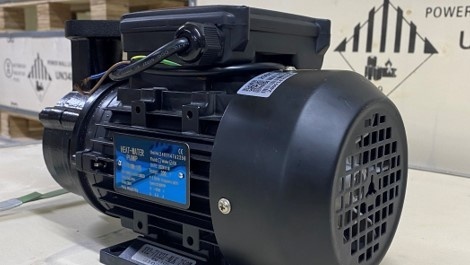
HGR550-DN40 drying chamber circulation pump — stable operation where temperature is important
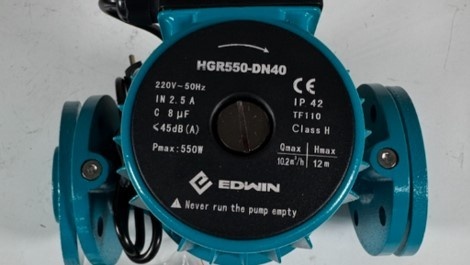
A drying chamber is a system that does not forgive failures. If the circulation of the heat transfer medium is disrupted, the temperature becomes uneven, the process takes longer, and the final result suffers. That is why in such conditions a HGR550-DN40 circulation pump with a wet rotor is used, ensuring stable and continuous operation of the system.
This is a pump that does not draw attention to itself, yet without it the drying chamber simply cannot operate as intended.
What the HGR550-DN40 pump is
The HGR550-DN40 is a circulation pump designed specifically for drying chambers and intended for systems with continuous circulation of a heat transfer medium. It operates on a 220 V power supply, which simplifies connection and eliminates the need for three-phase power.
The wet-rotor design means that the pump rotor is cooled and lubricated directly by the working fluid. As a result, the pump operates quietly, stably, and does not require complex maintenance.
Why a wet rotor
Wet-rotor pumps have long proven themselves in systems where continuity and low noise levels are critical. In drying chambers, this is especially important.
The main advantages of this design are:
minimal noise level;
no need for additional lubrication;
reduced wear of moving parts;
stable operation under prolonged load.
This is why the HGR550-DN40 easily handles long drying cycles.
Where the HGR550-DN40 pump is used
This circulation pump is used in various types of drying and thermal systems:
wood drying chambers;
industrial dryers;
thermal circuits of drying equipment;
hot water recirculation systems;
process systems with constant temperature requirements.
It ensures uniform movement of the heat transfer medium, which directly affects drying quality.
Why the circulation pump is critical here
Without stable circulation, even the most powerful heating source will not deliver results. The pump is responsible for distributing heat evenly, without “cold zones” or overheating.
The HGR550-DN40 allows you to:
maintain a stable temperature;
reduce energy consumption;
shorten drying time;
improve the quality of the finished product.
This is a key component on which the entire process depends.
Easy installation and operation
The pump is easy to install thanks to the standard DN40 connection. It does not require complex maintenance, which is especially important for equipment operating continuously.
The 220 V power supply makes it a convenient solution for most facilities without additional investment in electrical infrastructure.
Where to buy the HGR550-DN40 pump
You can purchase the HGR550-DN40 circulation pump for drying chambers, 220 V, with a wet rotor on our website. We will help you select the right pump for your specific operating conditions and provide installation advice.
HGR550-DN40 is a reliable circulation pump for drying chambers that ensures stable temperature and uniform circulation of the heat transfer medium. If process control, energy efficiency, and consistent results matter to you, this pump is the right choice.

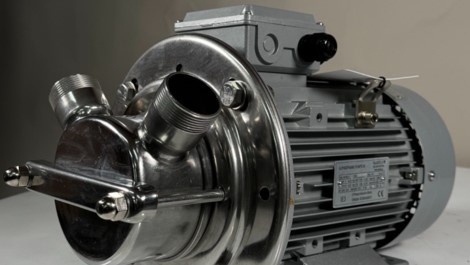
There are pumps that simply move water, and there are pumps designed for more delicate and responsible tasks. AlphaDynamic AD30.1/01 belongs to the latter category. It is an impeller pump with a power rating of 0.55 kW, combining compact dimensions, gentle fluid handling, and stable operation even under demanding conditions.
It is often chosen when not only fluid transfer is important, but also process control, precision, and reliability.
What the AD30.1/01 pump is
AlphaDynamic AD30.1/01 is a pump with an elastic impeller that обеспечивает smooth and uniform flow without sudden hydraulic shocks. Thanks to this design, it is well suited for pumping fluids that are sensitive to mechanical stress, as well as media containing small impurities.
The 0.55 kW motor makes the pump energy-efficient while still providing sufficient performance for most technical and industrial applications.
Where the impeller pump is used
AlphaDynamic AD30.1/01 is widely used in various industries:
food industry (beverages, syrups, oils);
chemical and technological processes;
pharmaceutical production;
cosmetics industry;
pumping viscous and delicate fluids;
flushing, circulation, and dosing applications.
The impeller design allows operation with fluids that are not suitable for conventional centrifugal pumps.
Why an impeller pump matters
The main advantage of this type of pump is gentle and stable fluid delivery. It does not damage the product structure, does not create sharp pressure fluctuations, and handles viscous media very well.
In addition, impeller pumps are self-priming, which significantly simplifies start-up and system operation. This is especially convenient when the pump is not always installed below the liquid level.
Practicality in everyday operation
AlphaDynamic AD30.1/01 is easy to maintain and does not require complex adjustments. The design ensures easy access to key components, and impeller replacement can be carried out quickly.
Its compact size allows installation even in confined spaces, which is often a decisive factor in industrial environments.
Why choose AlphaDynamic
stable operation without overloads;
low energy consumption;
gentle handling of the pumped product;
versatile applications;
reliability of the AlphaDynamic brand.
This is a pump that does not create problems, but rather helps eliminate them.
Where to buy the AlphaDynamic pump
The AlphaDynamic AD30.1/01 impeller pump with a power rating of 0.55 kW is available on our website. We will help you select the right solution, provide professional advice, and recommend the optimal option for your operating conditions.
AlphaDynamic AD30.1/01 is a reliable impeller pump for applications where precision, gentle handling, and process stability are essential. It is well suited for both new projects and existing systems.
January 28, 2026
KLZDN25-PN16 stainless steel flow meter-rotameter — simple control that solves many problems
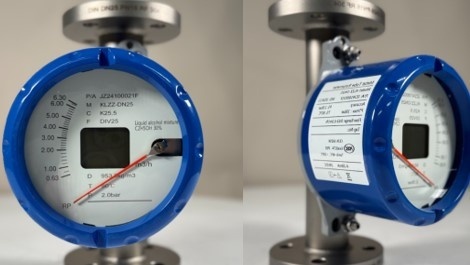
In any system where liquid or gas is present, sooner or later the issue of flow control arises. Without it, it is difficult to talk about stable operation, resource efficiency, and predictable results. This is exactly what the KLZDN25-PN16 stainless steel flowmeter-rotameter with a 4–20 mA output is designed for.
This is a case where the equipment looks simple but performs a very important job every day — quietly, reliably, and without requiring constant attention.
What kind of flowmeter it is and why it is chosen
KLZDN25-PN16 is a mechanical rotameter in a metal housing that allows visual flow monitoring while simultaneously transmitting a signal to automation or a controller via an analog 4–20 mA output.
The housing is made of stainless steel, so the flowmeter is resistant to moisture, temperature fluctuations, and aggressive environments. It is often installed where standard plastic or glass instruments simply cannot withstand operating conditions.
The nominal diameter DN25 and operating pressure PN16 make this rotameter a universal solution for most industrial and technical systems.
What the 4–20 mA signal is for
In practice, visual control alone is often not enough. That is why the KLZ model is equipped with a 4–20 mA output, which allows you to:
transmit data to a PLC or controller;
integrate the flowmeter into an automation system;
remotely monitor the process;
build protection or emergency scenarios.
This is especially important where the process must be stable and controllable without the constant presence of an operator.
Where the KLZDN25-PN16 flowmeter is used
This rotameter has proven itself well in various industries:
chemical and food industries;
heat exchange and cooling circuits;
process pipelines;
liquid and gas dosing;
pumping and filtration systems.
Thanks to its metal housing and simple design, it can be installed both indoors and in harsher operating environments.
Not only DN25 — other diameters are also available
It is important to note that the KLZ series is available not only in DN25. Other diameters (DN) are also available, allowing you to select a flowmeter for a specific pipeline without modifications or compromises. This is convenient for both new projects and the modernization of existing systems.
Why such a flowmeter is really needed. In practice, it directly affects:
stability of the technological process;
quality of the final product;
energy and resource consumption;
operational safety of the equipment.
KLZDN25-PN16 allows you to keep the process under control and respond to deviations in a timely manner.
Where to buy the flowmeter
The stainless steel KLZDN25-PN16 flowmeter-rotameter with a 4–20 mA output, as well as models with other DN sizes, can be purchased on our website .
We will help you select the optimal option for your operating conditions.
KLZDN25-PN16 is a reliable, clear, and proven flow control instrument suitable for serious applications. The stainless steel housing, 4–20 mA signal, and availability of other DN sizes make it a practical solution for many systems.
January 27, 2026
Y1-4000D pump protection and control panel

Any pump is more than just a motor and an impeller. It is equipment that often operates for hours, and sometimes around the clock. And it is precisely in such conditions that problems most often occur: one phase is lost, overload appears, voltage “fluctuates”, while the pump continues to run until it burns out. To prevent this, a Y1-4000D pump protection and control panel is used.
This is a simple but very important solution for those who want the pump to operate reliably and without costly repairs.
What the Y1-4000D panel is used for
The Y1-4000D panel is designed to control and protect three-phase pumps operating on a 380V power supply. Its main task is to monitor pump operation and respond promptly to any dangerous situations.
If one of the phases is lost, an overload occurs, or the voltage becomes unstable, the panel automatically switches off the pump, preventing it from operating under damaging conditions. This is especially important where equipment operates without constant human supervision.
The panel enclosure is made of durable ABS plastic that withstands mechanical stress, moisture, and dust well. Therefore, it can be used not only in clean technical rooms, but also in production facilities, pumping stations, or utility buildings.
Where this panel is used
The Y1-4000D panel is widely used in various applications:
water supply systems for private houses;
borehole and surface pumps;
irrigation and watering in agriculture;
pumping stations;
industrial and commercial facilities;
systems for drainage of water and technical liquids.
In practice, any three-phase pump requires such a panel if reliability and stable operation are important.
Why a pump is at risk without a panel
In practice, most pump failures occur not because of manufacturing defects, but due to operating conditions. Phase imbalance, short-term voltage fluctuations, or operation under overload gradually “kill” the motor.
The Y1-4000D takes this risk upon itself. It monitors pump operation and intervenes exactly when it is really necessary. As a result:
motor wear is reduced;
the pump operates much longer;
repair and replacement costs are reduced;
the system operates more stably.
Easy to use, effective in operation
The panel does not require complex setup. After connection, it operates automatically, and indicator lights allow you to quickly assess the system status. This is convenient both for professional installers and for regular users.
Where to buy the Y1-4000D panel
You can purchase the Y1-4000D pump protection and control panel on our website. We offer proven equipment that really works and meets its declared specifications.
You can buy this or another protection panel using this link .
If a pump is an important part of your system rather than a consumable item, the Y1-4000D panel becomes a necessity rather than an optional extra. It is a simple solution that protects expensive equipment, saves money, and provides peace of mind in everyday operation.
January 26, 2026
WCB series gear pumps

Our company strives to meet customer needs in pumping equipment by offering a wide product range, high quality, and affordable prices.
This short review is dedicated to exactly such equipment. Recently, we unloaded another shipment at our warehouse, namely the WCB series gear pumps .
WCB pumps are portable gear pumps made of AISI 304 stainless steel. The wetted parts of the pump (housing and gears) are entirely made of stainless steel, which allows the pump to be used for transferring both technical liquids (lubricating oils, fuel oil, silicone, adhesives, resins) and a wide range of food products (sunflower oil, olive oil, sour cream, condensed milk, etc.), as well as detergents, diesel fuel, and many other fluids.
We stock three main standard sizes of these pumps in our warehouse
Each model is equipped with internal threaded ports of the following diameters:
WCB-50 – 1/2’’
WCB-70 – 3/4’’
WCB-100 – 1’’
The number in the designation WCB- 50 indicates the nominal pump capacity at 3000 rpm, i.e. 50 l/min for this model.
Each model is also available in two power supply options:
220 V, 50 Hz – single-phase power supply
380 V, 50 Hz – three-phase power supply
Each model is also available in two nominal rotational speed versions:
3000 rpm
1500 rpm
(the actual motor speed is indicated on the nameplate)
Accordingly, it should be noted that, for example, a WCB-50 pump equipped with a 1500 rpm motor will have half the capacity of the same model with a 3000 rpm motor, i.e. 25 l/min.
All models without exception are equipped with an explosion-proof electric motor rated ExdbIIBT4Gb .
This allows the pumps to be used in hazardous areas for transferring alcohols (methanol, ethanol, bioethanol), gasoline, kerosene, and other explosive and flammable liquids.
A significant design advantage is the pump drive via a coupling with an elastic insert.
Firstly, this allows the use of a standard electric motor without an extended shaft. Secondly, in the event of seal leakage, this design is safer for the electric motor.
The coupling halves are made of an aluminum alloy. This is done intentionally to protect the motor and the gears. Since this series is not equipped with a safety (relief) valve, closing a valve on the discharge pipeline or attempting to regulate the flow rate with a valve on the discharge line may lead to motor failure or gear damage.
In this case, the coupling, in addition to its main function of torque transmission, also serves as a safety element in the event of overload.
WARNING! If there is a possibility or risk of closing the discharge pipeline, the customer should provide a bypass line with a safety valve.
The working chamber of these pumps is sealed with a standard reinforced lip seal (often referred to by mechanics as an “oil seal”) 2.1–15×30×10 FKM in accordance with GOST 8752-79.
The rubber material allows the seal to be used at temperatures from −30 °C to +170 °C; however, the maximum operating temperature specified in the pump’s technical data is +60 °C. This is not a contradiction, as the maximum temperature is limited not only by the seal but also by the working clearances between the gears and the chamber walls.
Compared to a mechanical seal, the reinforced lip seal has a shorter service life and causes wear on the shaft at the point of contact. However, it is much easier and faster to replace during maintenance, and its cost is many times lower than that of a mechanical seal.
January 23, 2026
Repair of the HC 150 AQUA dosing pump

Dosing pumps from the Italian company AQUA have gained popularity thanks to their high reliability, ease of repair, and reasonable price.
The largest segment consists of solenoid dosing pumps , which are used in various industries (washing stations, dosing of enzymes and yeast, water chlorination, grain disinfection, etc.).
The design of a solenoid pump is quite simple. The main components are the solenoid itself, the dosing head, and the electronic control board.
If the pump stops working or significantly deviates from the required parameters, the cause is usually a failure of one of the above-mentioned components.
A pump model HC 150 (discontinued) was received for repair. The customer’s complaint was that the pump does not deliver the required dose of detergent. With a rated capacity of 5 l/h, the pump delivers only 1 l.
After thorough inspection and test runs, the cause of the unsatisfactory performance was identified as deformation of the diaphragm.
In the photo below, you can see the difference between a new diaphragm and a diaphragm that has reached the end of its service life.
After replacing the diaphragm, the pump restored its performance and continues to successfully perform its function.
In this case, the repair is cost-effective since the cost of the diaphragm is low. If several factors causing failure are identified during diagnostics, such as a burned-out solenoid and a failed electronic control board, purchasing a new dosing pump would be more appropriate.
Specialists from our company are always ready to help you choose the right model.
January 22, 2026
Diesel pumping stations

A diesel-driven pumping station is an indispensable solution for operation in field conditions where there is no stationary power supply.
This type of pumping equipment is especially relevant for farmers when carrying out irrigation works. In our range, you can select a pumping station suitable for almost any required capacity and pressure.
When installed on a chassis, such a station can be used as a mobile fire-fighting unit, for emergency drainage, water supply, and other applications.
A key feature of this type of equipment is the use of special high-performance diesel engines with a rotational speed of 3000 rpm, which is equivalent to the speed of a standard electric asynchronous motor. Only at this speed can the pump achieve its rated performance characteristics.
A diesel pumping station includes: a pump, diesel engine, radiator, fuel tank, support frame, cardan shaft, air filter, control panel, and muffler. Materials: pump casing – cast iron with an anti-corrosion coating; shaft – chrome-plated steel; mechanical seal – Carbon-SiC-NBR.
The advantage of this configuration is the absence of intermediate drive components (gearboxes, V-belts, or chain drives). Depending on power, the diesel engine consumes only 204–240 g/kWh of fuel.
The station is equipped with an electronic digital device for monitoring all operating parameters of the internal combustion engine. Proper settings and timely maintenance ensure long-term and reliable operation of the pumping unit.
January 21, 2026
About inches and millimeters

Undoubtedly, everyone knows that since the beginning of its existence, humanity has constantly used various systems for measuring distance (length), time, weight, and other quantities.
Different cultures and peoples used different measurement methods. These included feet, yards, miles (nautical and land miles, which, by the way, differ in length), cubits, millimeters, phalanges, inches, and so on.
In the context of our specialization — pumps , mechanical seals , and shut-off and control valves — let us clarify some specific aspects related to the use of length measurement units.
Today, the most widespread measurement systems are the metric system (or the International System of Units, SI, based on the meter and, accordingly, the millimeter as part of the meter) and the English system of measures (Common System), which is based on the inch.
The English system of measures is still widely used in the USA, Canada, Japan, and, of course, in the homeland of the inch — Great Britain. The metric system is used in Europe and most countries around the world, including Ukraine.
With the development of science, technology, and trade, the need arose to “link” inches to millimeters.
In 1930, the British Standards Institution adopted the inch value as 1 inch = 25.4 mm .
The international designation for the inch is in . In practice, it is often denoted by a double quote symbol — “ ” ”.
It would seem that the issue has finally been resolved. Although 25.4 is not a very convenient number for converting inches to millimeters or vice versa, with a calculator at hand even a primary school student can handle it.
But there is one BUT!
If you suddenly need to repair plumbing in your apartment and purchase a pipe fitting of, for example, 3/4" in a plumbing store, then measure its outer diameter, you will be surprised to find that it is approximately 26 mm (see photo below).
3/4’’ nipple
Logically, if 1’’ = 25.4 mm, then 25.4 × 3/4 (0.75) = 19.05 mm. So where did 26 mm come from? Did the store clerk make a mistake? In fact, there is no mistake at all. Wherever you buy a fitting of this size, its outer diameter will be about 26 mm. Likewise, a plug or nipple of size 1’’ will have an outer diameter of about 33 mm (although logically it should be 25.4 mm).
To understand this discrepancy, it is worth going back to the historical period when metal pipe production was just beginning. Since the inventor of the industrial method of manufacturing pipes from sheet metal was the English engineer James Russell, English units — inches — were used for pipe dimensions. In addition ( and this is the most important point! ), inches were used to measure the internal diameter of the pipe, not the external one.
This is very convenient for calculating pipeline capacity, that is, for hydraulic calculations. The sheet thickness could vary slightly, and therefore the external diameter varied, while the internal flow diameter always had a constant value expressed in inches — 1/2’’, 3/4’’, 1’’, and so on.
If you measure the internal diameter of the same fitting, you will see that it is about 20 mm (depending on the manufacturer, this dimension may vary from 19 to 21 mm). This size corresponds exactly to 3/4’’.
Since pipes had to be connected, pipe threads (specifically, English inch threads) were cut on the pipe ends. Historically, it happened that this thread began to be called “inch” thread and was designated by the size of the internal pipe bore.
Accordingly, it is clear that a certain wall thickness is required to cut a thread, because it is impossible to cut a thread of the actual size 3/4’’ (that is, 19.05 mm) on a pipe that has the same internal diameter. In our case, for this size the wall thickness is 3.5 mm. Thus: 19.05 + 3.5 + 3.5 = 26.05 mm.
That is why if you buy a 3/4’’ fitting in a plumbing store, its outer diameter will be about 26 mm; for 1/2’’ — about 21 mm; and for 1’’ — about 33 mm.
The table below shows other commonly used pipeline diameters.
As you can see, the first column on the left shows the so-called nominal pipeline diameter (that is, the conditional internal diameter of the pipe).
It is called conditional because the pipe may have different wall thicknesses, and accordingly the cross-sectional area may differ slightly.
If you divide this value by 1 inch (25.4 mm), you will obtain exactly those English inches that are traditionally used to mark plumbing fittings.
That is: 20 / 25.4 = 0.78 (3/4 inch), 25 / 25.4 = 0.98 (1 inch), 32 / 25.4 = 1.26 (1.25 inches or 1 ¼ inches).
The column to the right shows the actual outer diameter of the pipe in millimeters.
This specific feature of pipe inches and their actual discrepancy with millimeters should be taken into account when selecting pumping equipment and connecting elements for installation and piping.
January 20, 2026
Metering pumps

Metering pumps are used for accurate and safe dosing of chemical substances, as well as for their transportation in various technological processes.
Areas of application: chemical, pharmaceutical, food, water treatment industries, and others.
Chemical industry: for precise dosing of reagents in production processes.
Water treatment systems: for dosing coagulants or disinfectants.
Food industry: for dosing additives, colorants, and flavorings.
Pharmaceutical industry: for supplying medicinal products in the required dosage.
The main purpose of metering pumps: accurate dosing; flow rate control; process automation.
AQUA pumps are equipped with ball check valves; the standard configuration includes PYREX® ball valves and Viton® seals. All electromagnetically driven metering pumps, except DC models, are equipped with a level sensor input.
AQUA offers a range of electromagnetic pumps capable of operating over a wide range of pressures and flow rates: pressure up to 20 bar and flow rates up to 45 liters per hour.
Parameters that are important to consider when selecting a metering pump:
Dosing accuracy (speed and precision of dose measurement).
Type and properties of the liquid (viscosity, chemical aggressiveness, temperature).
Capacity and pressure.
Construction materials (special materials are required for aggressive and corrosive media).
January 19, 2026
WM vortex oil pumps
WM vortex oil pumps are used for pumping hot water, ethylene glycol, light oils, lubricants, and fuels without solid impurities or fibrous inclusions. The temperature of the pumped liquid can reach up to 200 °C.
The operating principle is based on creating a vortex in the working chamber. The liquid enters the pump, is captured by the impeller blades, and as a result of centrifugal force and vortex formation receives an energy impulse. This allows the liquid to move toward the outlet under high pressure.
Pumping temperature ranges for various liquids: water +5 °C ~ +160 °C; thermal oil +5 °C ~ +200 °C; ethylene glycol −30 °C ~ +180 °C. This is possible thanks to a special mechanical seal that can withstand high temperatures.
The manufacturer supplies the pumps with mating flanges and gaskets.