Cooling the electric motor of a well pump
 Administrator 1April 13, 2026
The electric motor of a borehole pump, unlike a standard asynchronous electric motor with air cooling, has certain features.
Due to the fact that it is located in a borehole, its diameter has certain limitations — it cannot be larger than the borehole itself. In addition, this motor is constantly under water, therefore it must be hermetically sealed.
Borehole pump motors are divided into two main groups:
- oil-filled;
- water-filled.
In the first case, the motor is filled with a special oil (lubricant), most often a petroleum jelly–based lubricant or another dielectric liquid that ensures its cooling.
Water-filled motors are cooled by water, while the winding wire of the electric motor is coated with PVC.
The tightness of the motor at the point where the drive shaft exits is ensured by a mechanical seal and additionally by a gland seal.
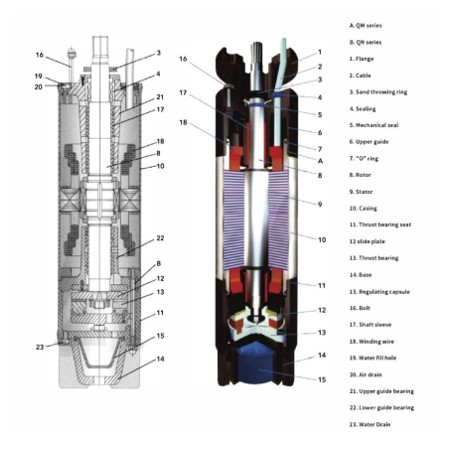
In both cases, cooling is provided by the water pumped by the pump. Water is drawn into the pump section at a certain velocity. The velocity depends on the pump capacity and the difference between the diameters of the motor and the borehole – (Dс-dн)
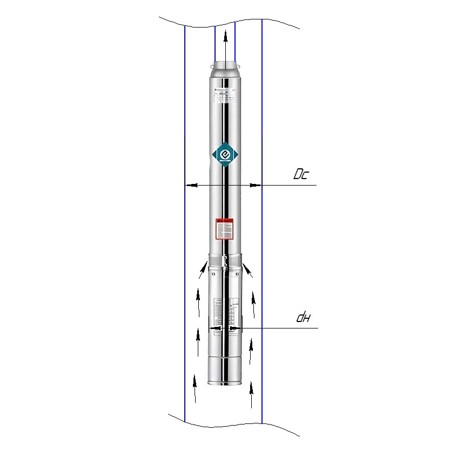
The detailed specifications of the borehole pump motor indicate the minimum water flow velocity along the motor housing required to ensure reliable cooling.
On average, the water velocity should be more than 8 cm per second. Therefore, as can be seen from the illustration above, when selecting a borehole pump it is necessary to consider the borehole diameter, pump capacity, and the diameter of the pump itself.
Our company’s managers are ready to help you choose a pump according to your needs!