Submersible Well Pumps: Features, Types, and Equipment Selection
 Administrator 1March 29, 2026
When it is necessary to organize a stable water supply from an underground source, one of the most effective solutions is the use of a submersible borehole pump. Such equipment is used both in private homes and on farms, industrial facilities, or irrigation systems. Its main task is to lift water from a great depth and provide the required pressure in the system.
Unlike surface pumps, submersible models are installed directly in the borehole, below the water level. Thanks to this, they can operate at significantly greater depths and reliably supply water even when the source is located tens or hundreds of meters below the surface.
Features of submersible borehole pumps
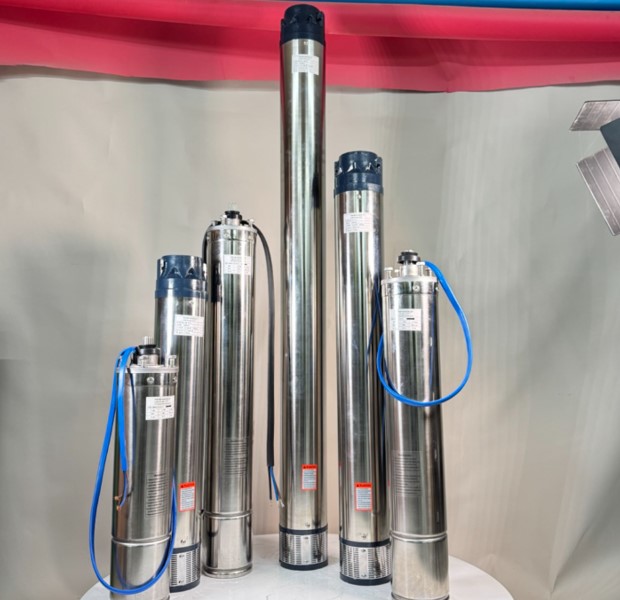
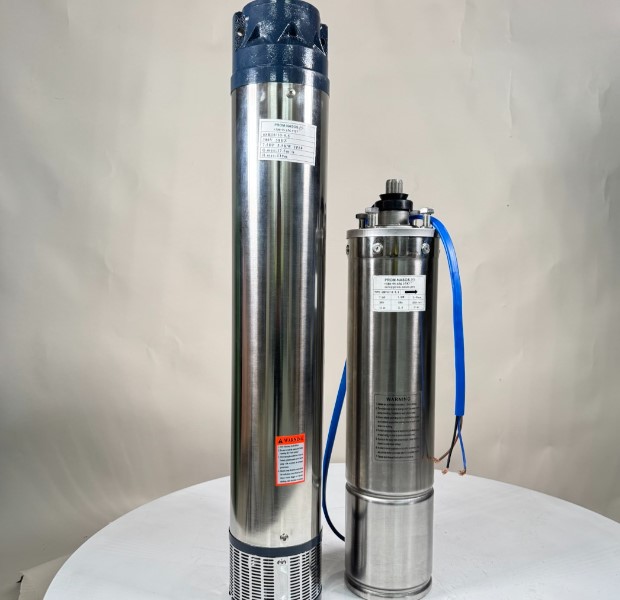
The design of borehole pumps is intended for operation in difficult conditions. They have a sealed housing that protects the motor from contact with water, as well as a multistage impeller system that creates the required pressure.
In most models, the housing is made of stainless steel or wear-resistant alloys. This allows the equipment to operate for a long time in a water environment without corrosion or loss of performance.
Another characteristic feature of such pumps is their elongated shape. This design allows the equipment to easily fit into the borehole and operate even in narrow casing pipes.
Different performance types
Submersible pumps can differ significantly from each other in technical parameters. The most important of them are capacity, head, and motor power.
For example, for a small private house a pump with a capacity of several cubic meters of water per hour is usually sufficient. At the same time, a farm or an industrial facility may require equipment capable of pumping dozens of cubic meters of water during the same time.
Head is also an important indicator. It determines from what depth the pump can lift water and what pressure will be created in the water supply system. The deeper the borehole, the greater the head the pump should have.
Differences between models
Borehole pumps may differ not only in performance. Among other parameters that should be considered are:
- pump diameter (for example 3, 4, 5 or 6 inches);
- electric motor power;
- maximum head;
- housing material;
- power supply type — single-phase or three-phase.
It is the combination of these characteristics that determines the conditions for which a specific pump model is suitable.
Why choose a borehole pump
Submersible pumps have several important advantages compared to other types of pumping equipment.
First, they can operate at significant depths where surface pumps simply cannot cope.
Second, such equipment provides a stable water supply even during long-term operation. This is important for home water supply systems, irrigation, or industrial needs.
Another advantage is compactness. The pump is installed directly in the borehole and does not take up space on the surface.
Individual equipment selection
Since every borehole has its own characteristics — depth, water level, pipe diameter, and required capacity — it is best to select the pump individually.
It is important to consider not only the technical parameters of the equipment but also the operating conditions. An incorrectly selected pump may work inefficiently or wear out quickly.
On our website you will find a wide selection of submersible borehole pumps with different capacities and power ratings. We help select equipment according to the specific parameters of the borehole and the customer’s needs so that the water supply system works reliably and without unnecessary costs.
Submersible borehole pumps are one of the most effective solutions for lifting water from underground sources. They are characterized by high reliability, the ability to operate at great depths, and a wide range of models with different characteristics.
The correct selection of equipment makes it possible to ensure a stable water supply for a house, farm, or industrial facility. Therefore, before purchasing, it is important to consider the borehole parameters and the required capacity. Our specialists will help you select a submersible borehole pump according to your tasks and operating conditions.