2026 — Prom-nasos.com.ua
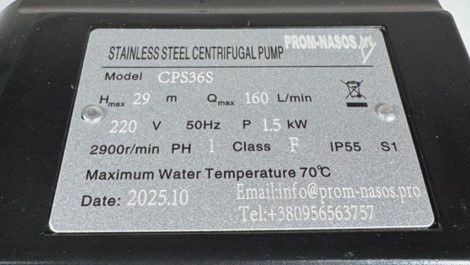
In beverage production — especially when it comes to beer, wine, or alcohol — the equipment used for transporting liquids plays an important role. Pumps must operate reliably, must not affect product quality, and must comply with food industry requirements. For such tasks, food-grade stainless steel centrifugal pumps are used, one of which is the CPS36S model.
This pump is designed for pumping various liquids without solid impurities. It is most commonly found in breweries, wineries, alcohol production facilities, and food industry enterprises. Thanks to its simple design and reliable materials, it is suitable for both small production facilities and medium-scale technological lines.
Design and operating principle
CPS36S is a centrifugal end-suction pump that operates according to a fairly simple principle. Inside the casing there is an impeller that rotates at high speed. During rotation, centrifugal force is generated, which moves the liquid from the center of the chamber to the outlet nozzle.
This design ensures a smooth and stable liquid flow without sudden pressure fluctuations. This is important in beverage production, as delicate products such as beer or wine should not be exposed to excessive mechanical impact.
The pump casing is made of AISI 304 stainless steel. This material is widely used in the food industry because it is corrosion-resistant, easy to clean, and does not react with food products.
Main specifications
The main technical parameters of the CPS36S pump include:
electric motor power — 1.5 kW;
maximum capacity — up to 11 m³/h;
maximum head — approximately up to 30–34 m;
motor speed — about 2900 rpm;
power supply — 220 V, 50 Hz;
casing material — AISI 304 stainless steel;
permissible liquid temperature — up to 60 °C.
Thanks to these characteristics, the pump is well suited for pumping food-grade liquids in production processes or for transferring products between tanks.
Advantages of the CPS36S pump
Food-grade stainless steel;
Stable operation;
Easy maintenance;
Compact size;
Versatile application.
The model is suitable not only for beer or wine. It can also be used for pumping alcohol, milk, water, or other liquids without mechanical impurities.
Application areas
The CPS36S pump is used in various sectors of the food industry. It is most commonly applied for:
pumping beer in breweries;
transporting wine in wineries;
working with alcohol in distilleries;
pumping milk and other food liquids;
use in technological lines of food production facilities.
Thanks to its versatility, the pump can be used in various processes where liquid needs to be moved without losing its properties.
The CPS36S pump is a practical solution for companies working with beer, wine, alcohol, and other food liquids. Its main advantages are the stainless steel casing, stable operation, and simple design that ensures reliability in everyday use.
If you need to select such a pump for a brewery, winery, or other production facility, it is important to consider the required capacity, head, and liquid characteristics. On our website you can purchase the CPS36S pump, as well as receive consultation and individual selection of pumping equipment according to your tasks. This allows you to choose the optimal solution for a specific production process.

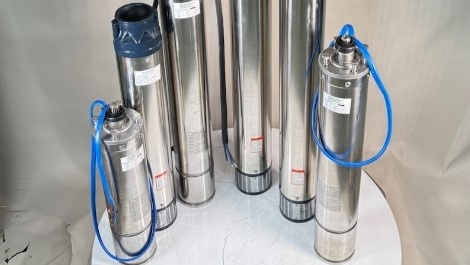
When it is necessary to organize a stable water supply from an underground source, one of the most effective solutions is the use of a submersible borehole pump . Such equipment is used both in private homes and on farms, industrial facilities, or irrigation systems. Its main task is to lift water from a great depth and provide the required pressure in the system.
Unlike surface pumps, submersible models are installed directly in the borehole, below the water level. Thanks to this, they can operate at significantly greater depths and reliably supply water even when the source is located tens or hundreds of meters below the surface.
Features of submersible borehole pumps
The design of borehole pumps is intended for operation in difficult conditions. They have a sealed housing that protects the motor from contact with water, as well as a multistage impeller system that creates the required pressure.
In most models, the housing is made of stainless steel or wear-resistant alloys. This allows the equipment to operate for a long time in a water environment without corrosion or loss of performance.
Another characteristic feature of such pumps is their elongated shape. This design allows the equipment to easily fit into the borehole and operate even in narrow casing pipes.
Different performance types
Submersible pumps can differ significantly from each other in technical parameters. The most important of them are capacity, head, and motor power.
For example, for a small private house a pump with a capacity of several cubic meters of water per hour is usually sufficient. At the same time, a farm or an industrial facility may require equipment capable of pumping dozens of cubic meters of water during the same time.
Head is also an important indicator. It determines from what depth the pump can lift water and what pressure will be created in the water supply system. The deeper the borehole, the greater the head the pump should have.
Differences between models
Borehole pumps may differ not only in performance. Among other parameters that should be considered are:
pump diameter (for example 3, 4, 5 or 6 inches);
electric motor power;
maximum head;
housing material;
power supply type — single-phase or three-phase.
It is the combination of these characteristics that determines the conditions for which a specific pump model is suitable.
Why choose a borehole pump
Submersible pumps have several important advantages compared to other types of pumping equipment.
First, they can operate at significant depths where surface pumps simply cannot cope.
Second, such equipment provides a stable water supply even during long-term operation. This is important for home water supply systems, irrigation, or industrial needs.
Another advantage is compactness. The pump is installed directly in the borehole and does not take up space on the surface.
Individual equipment selection
Since every borehole has its own characteristics — depth, water level, pipe diameter, and required capacity — it is best to select the pump individually.
It is important to consider not only the technical parameters of the equipment but also the operating conditions. An incorrectly selected pump may work inefficiently or wear out quickly.
On our website you will find a wide selection of submersible borehole pumps with different capacities and power ratings. We help select equipment according to the specific parameters of the borehole and the customer’s needs so that the water supply system works reliably and without unnecessary costs.
Submersible borehole pumps are one of the most effective solutions for lifting water from underground sources. They are characterized by high reliability, the ability to operate at great depths, and a wide range of models with different characteristics.
The correct selection of equipment makes it possible to ensure a stable water supply for a house, farm, or industrial facility. Therefore, before purchasing, it is important to consider the borehole parameters and the required capacity. Our specialists will help you select a submersible borehole pump according to your tasks and operating conditions.
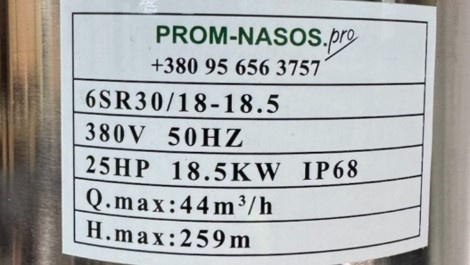
Borehole pumps are widely used today for stable water supply in private households, farms, and industrial facilities. One of the models that has proven itself well when working with deep water sources is the 6SR30/18-18.5 pump . This is a high-performance piece of equipment designed for long-term operation in demanding conditions and capable of delivering a significant volume of water.
The 6SR30/18-18.5 model belongs to the class of multistage submersible pumps designed for installation in boreholes. The equipment is engineered to operate at considerable depths and ensures stable water supply even during intensive use.
Such pumps are used both in centralized water supply systems and for irrigation, supplying technical water, or providing water for industrial processes.
The housing and main components are made of stainless steel, which provides high corrosion resistance and a long service life.
Main characteristics
The 6SR30/18-18.5 pump has parameters that allow it to be used in boreholes of medium and large depths:
electric motor power — 18.5 kW;
maximum capacity — up to 40 m³/h;
maximum head — up to 257 m;
pump diameter — 6 inches (150 mm);
discharge outlet diameter — 3 inches;
motor speed — about 2850 rpm;
power supply — three-phase 380 V, 50 Hz;
housing and shaft material — stainless steel AISI 304.
Thanks to these characteristics, the pump can operate in systems where high performance and constant water pressure are required.
Advantages and applications of the 6SR30/18-18.5 pump
In practice, the 6SR30/18-18.5 pump is well suited for:
water supply systems for private houses and cottage communities;
agricultural enterprises and irrigation systems;
water intake from deep boreholes;
municipal and industrial facilities.
Due to its high performance, it can be used where standard household pumps are no longer able to handle the task.
If there is a need to select a submersible borehole pump for specific operating conditions, it is important to consider the borehole parameters, required capacity, and water lifting depth. On our website you can purchase the 6SR30/18-18.5 pump and also receive an individual equipment selection according to your needs. Our specialists will help you choose the optimal model and provide консультацію regarding installation and operation.
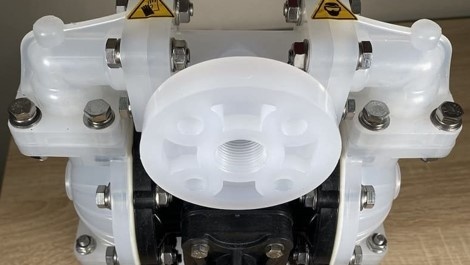
Fields of application
Chemical industry
Paint and coatings production
Oil and gas as well as petroleum refining
Pharmaceuticals and biotechnology
Explosion-hazardous production facilities
Laboratories working with hazardous substances
This pump works well with liquids that aggressively affect metals, have high volatility or toxicity, and where emulsions, suspensions, or solid particles in the composition are common.
Advantages
Full explosion protection
Thanks to ATEX certification, the pump operates without the risk of sparking, which is extremely important when working in hazardous conditions.
Corrosion-resistant materials
Polypropylene and PTFE withstand aggressive chemical environments, as well as acidic or alkaline solutions.
No electric drive
Pneumatic operation eliminates the need for electricity.
Easy maintenance
The simple diaphragm-type design allows for quick and convenient technical servicing.
Flexible use
Suitable for a wide range of liquids: from clean to viscous, abrasive, or chemically active.
ATEX DiaPump DP 05 PP/T is a reliable option that can be used without issues for pumping aggressive, explosive, and complex liquids in industrial conditions. The combination of the explosion-proof ATEX standard, corrosion-resistant materials, and easy maintenance makes this pump suitable for various industries.
The pump is designed to operate for a long time and ensure personnel safety.
You can order the ATEX DiaPump DP 05 PP/T pump on our website — simply add it to the cart or contact our consultants.
March 13, 2026
Molecular sieve type 3A
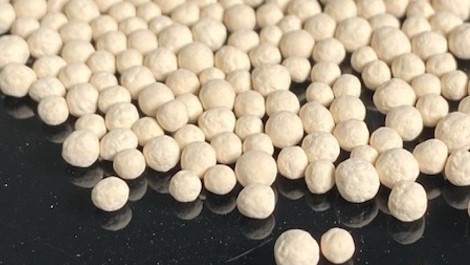
Molecular sieve type 3A is a type of zeolite with very small pores approximately 3 angstroms (0.3 nm) in diameter. Due to its properties, it can adsorb small-sized molecules, making it highly effective for selective adsorption.
For example:
Water (H₂O) — the main application: drying of gases and liquids;
Ammonia (NH₃);
Methanol (CH₃OH).
At the same time, larger molecules such as ethanol (C₂H₅OH), butane, or long-chain hydrocarbons cannot enter the pores and therefore are not adsorbed.
Main applications of 3A molecular sieve:
Drying of natural gas and biogas — removes water vapor without adsorbing larger molecules (e.g., hydrocarbons).
Drying of hydrogen, oxygen, nitrogen, and helium — often used in industrial installations to achieve extremely low moisture levels.
Used for drying ethanol, methanol, and other alcohols — allows achieving a high degree of dehydration, for example in the production of anhydrous ethanol.
Removal of water from liquefied petroleum gas (LPG), propane, and butane.
Used during storage and transportation of hydrocarbons to prevent corrosion and hydrate formation.
As an adsorbent in packaging to maintain a dry environment.
Used in product concentration or purification processes.
March 12, 2026
Impeller pump
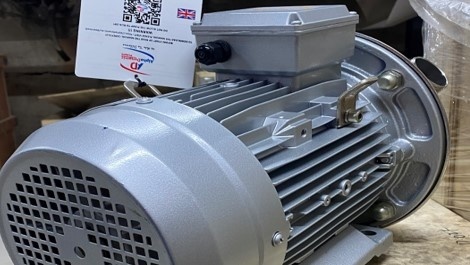
Impeller pump belongs to vane rotary pumps and is a positive displacement pump. It is referred to in different ways: a flexible vane pump, a soft rotor pump, or a flexible impeller pump. However, all these names refer to the same type of pump — the impeller pump.
Fields of application: food industry, cosmetics industry, chemical industry, and pharmaceutical industry.
The pump is used for pumping thick and viscous products such as honey, jam, yogurt, preserves, condensed milk, etc.
In the cosmetics industry, it is used for pumping shampoos, face masks, gels, creams, and lotions.
The impeller pump consists of two main parts: the electric motor and the pump housing.
The pump uses a closed-type asynchronous electric motor with a maximum shaft rotation speed of up to 1,500 revolutions per minute. Most commonly, pumps with an electric motor operating at 900 rpm are used. The power range of electric motors for impeller pumps varies from 0.55 kW to 6 kW. Pumps are available both with and without a motor.
The pump housing consists of a front cover, a rear cover, a flexible impeller, a mechanical seal, and a mounting flange.
The moving part of the pump — the impeller — is located inside the housing and positioned between the front and rear covers. It is a wide, monolithic open-type impeller with a varying number of flexible blades. The width of the impeller affects the pump capacity. The flexible impeller pump is self-priming and can lift the product from a depth of up to 5 meters.
The impeller pump combines the capabilities of a centrifugal pump and a positive displacement pump: it creates pressure and flow while also being able to pump thick and viscous liquids.
A wide range of impeller pumps from the well-known manufacturer AlphaDynamic can be purchased in our online store.
March 11, 2026
NOVAX series pumps from Italian manufacturer ROVER POMPE

NOVAX series pumps from the Italian manufacturer ROVER POMPE are designed for pumping any type of liquid that is not chemically aggressive or abrasive.
These pumps are widely used in the food, pharmaceutical, and cosmetic industries.
ROVER POMPE specializes in liquid ring (vortex) and gear pumps.
Pumps of this series are made from a high-quality stainless steel alloy specially developed to ensure resistance to corrosion and chemical effects, providing high quality and reliability.
Applications: pumping water, wine, milk, whey, beer, wort, mash, syrup, emulsions, vinegar, low-viscosity oil solutions, and neutral liquid detergents.
March 10, 2026
Active dry yeast
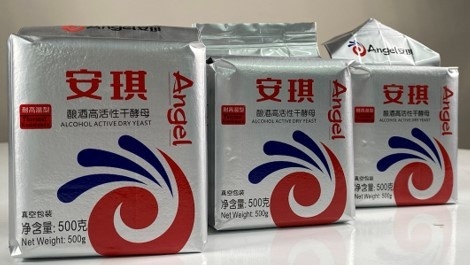
Angel Thermal Tolerance Alcohol Active Dry Yeast is an active dry alcohol yeast specially developed for fermentation under conditions of high temperature, high alcohol content, and acidity. The yeast is suitable for the production of fuel and food-grade ethanol from raw materials such as corn, rice, cassava, sorghum, as well as sugar-containing raw materials.
Main characteristics:
Temperature resistance: the yeast can operate at high temperatures (from 28 °C to 42 °C).
Ethanol tolerance: up to 17% vol. (v/v).
Acid resistance: capable of fermenting at pH up to 2.5, which helps prevent bacterial contamination and increases ethanol yield.
Osmotic resistance: withstands up to 60% glucose.
Moisture content: not more than 6.5%.
Live yeast cells: not less than 75%.
Total yeast count: not less than 2.5 × 10⁹ /g.
Application: add dry yeast to the fermentation vessel at a rate of 2.5–3 kg of yeast per 1 m³ of wort. The initial number of yeast cells in the wort reaches 5 million/ml.
March 9, 2026
Compact sewage pumping stations
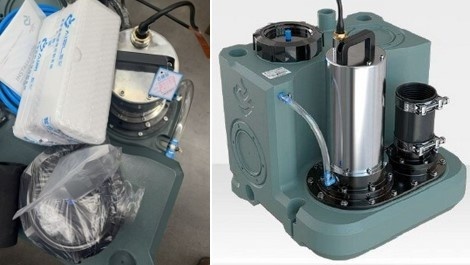
AIZL sewage pumping station is a ready-made solution both for a private house and for an industrial facility (bomb shelters, basement premises, cottages, wastewater drainage from food industry enterprises, etc.).
Advantages of a compact modular sewage pumping station
complete tightness, no odor;
plastic tank of various volumes depending on capacity, resistant to corrosion in aggressive environments;
external electric motor with oil cooling made of stainless steel — reliable operation and easy maintenance;
electronic water level sensor — accurate measurement and timely switching on and off of the pump;
remote control panel with a touchscreen is included in the set;
can be used with water temperatures up to +60℃, short-term up to +90℃.
Such a pumping station is a ready-made solution for sewage systems. The assortment includes stations for private houses as well as models for industrial use with the PRO designation.
March 5, 2026
Self-priming dirty water pumps as an alternative to submersible drainage and sewage pumps
Submersible drainage and sewage pumps are undoubtedly very widely used both in industry and in the private sector.
The main disadvantage of this type of pump is the complexity of maintenance and repair. If the mechanical seal fails or the motor burns out, the pump has to be removed from the septic tank, washed, and the pumping part must be disassembled. Often, due to the long-term presence of the equipment in an aggressive environment, even a simple operation such as unscrewing the mounting bolts becomes a difficult task.
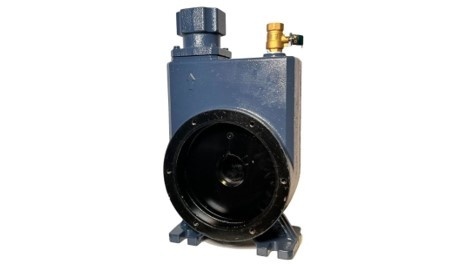
An alternative solution to these pumps is self-priming pumps for dirty water designed for surface installation.
Due to the presence of a priming chamber (see the photo below)
and a special impeller design – a vortex, multi-channel impeller (see the photo below).
These pumps can be successfully used for pumping surface water from septic tanks and cesspits.
The advantage of using such a pump is the possibility of applying it for pumping liquid from tanks with a narrow neck, when it is not possible to install a sewage pump, since in this case it is enough to lower only a pipe into the septic tank.
In addition, this pumping equipment is convenient to maintain. For example, the replacement of the mechanical seal can be performed on site, even without dismantling the pump from its installation location.