2026 — Prom-nasos.com.ua
June 23, 2026
Inline pumps from the Turkish manufacturer Erduro
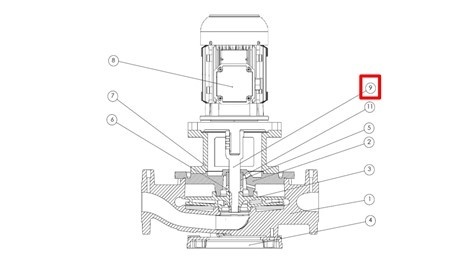
BTKF-I in-line pumps from the Turkish manufacturer Erduro offer all the advantages typical of this pump design:
compact construction thanks to the suction and discharge ports being positioned on the same axis;
easy installation;
high serviceability, as the electric motor can be removed without dismantling the pump from the pipeline.
An important feature of this particular series is the use of a shaft extension.
This makes it possible to use a standard asynchronous electric motor with a standard shaft.
This design provides a double advantage: the electric motor can be replaced quickly if damaged, and repairs remain cost-effective because only the shaft extension needs to be replaced rather than the entire motor, as is often the case with close-coupled pump designs.
The pumps can be installed in either vertical or horizontal positions.
On our online resources, you can select a pump of this design for heating, water supply, or other applications with virtually any required performance parameters.
Our managers will be pleased to help you choose the right model.

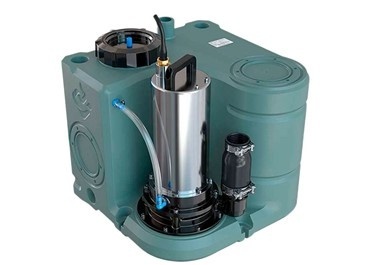
A wide range of compact sewage pumping stations from various manufacturers, also known as sewage lifting stations or Sololift units, is available on the Ukrainian market. These systems are designed for pumping wastewater from areas located below the sewer level, such as basements, utility rooms, bomb shelters, and similar facilities.
As an alternative to well-known brands such as Pedrollo, Wilo, DAB, and Grundfos, our company offers compact sewage pumping stations from the Chinese manufacturer AIZL .
For example, as an alternative to Wilo sewage pumping stations, we offer AIZL sewage pumping stations.
Advantages of AIZL sewage pumping stations:
S1-duty motor designed for continuous operation;
External cutting pump to prevent clogging;
304 stainless steel motor with oil cooling, providing low noise levels and extended service life;
Magnetic pneumatic valve that remains closed when not in use, preventing unpleasant odors;
AIZL-ICM intelligent controller with remote control, configuration, and push notifications;
HD touchscreen display for more convenient monitoring and operation;
High-precision electronic pressure sensor capable of accurately monitoring liquid levels and preventing debris entanglement;
Double-sided mechanical seal and a 150 ml oil chamber;
Fully enclosed HDPE container;
IP68 protection rating for complete submersion (excluding the controller);
Flexibly connected low-noise swing check valve;
Large-diameter Φ75 liquid level sensor to eliminate detection errors;
Operating temperature up to 60 ℃, with short-term operation up to +90 ℃ thanks to the external motor installation.
June 20, 2026
Replacing Old Water Faucets
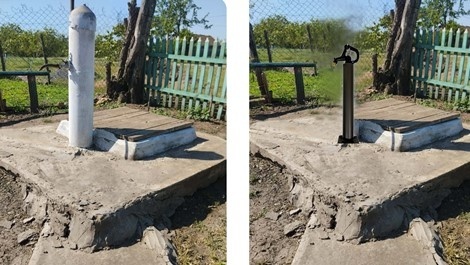
A water standpipe , also known as a drinking water hydrant , is a freestanding outdoor device designed to supply drinking water from a water distribution system to ground level and equipped with a faucet. It is used both in modern cities and in areas where residential buildings do not have direct access to centralized water supply systems. (According to the Wikipedia definition)
However, the use of these devices is not limited to this purpose alone. As more people choose to live outside cities in private homes, the demand for such water dispensing devices in private households continues to grow.
The purpose of installing a standpipe is not limited to utility applications. They are often installed as decorative elements, for example, in outdoor barbecue areas to enhance comfort and convenience. They make it easy to wash hands, fill containers with water for cooking, and perform other everyday tasks. Combined with landscape design features, they create a distinctive and attractive appearance.
The photo shows a frost-free BG-203 hydrant without a cover .
Frost-free standpipes are also widely used to replace older water standpipes, whose main disadvantage is that the water inside freezes during winter when temperatures drop below zero, making them unusable.
The photo below shows a project for replacing an old water standpipe with a frost-free hydrant equipped with a cover (pedestal). The pedestal is made from steel pipe and coated with powder paint, ensuring a long service life. Four mounting holes allow the hydrant to be securely fixed to a concrete or wooden base without requiring significant investment during replacement.
Frost-free BG-205 hydrant with a cover (pedestal) .
Another popular application for these devices is the use of frost-free standpipes for filling outdoor hot tubs.
Hot tubs are typically installed outdoors near a house or sauna, which means the water supply pipe often requires insulation and heating to prevent freezing.
A frost-free standpipe solves this problem without additional complexity.
Frost-free BG-205 hydrant without a cover .
Our company is a manufacturer and supplier of BG-type water standpipes .
Our managers will help you select the best option, and our technicians can manufacture a hydrant in virtually any length to meet your specific requirements.
May 28, 2026
BZ Centrifugal Pumps
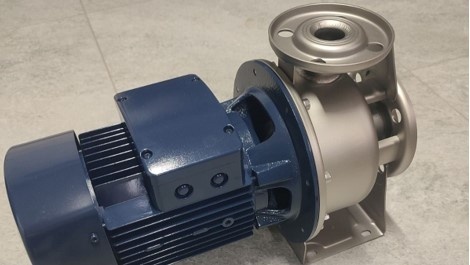
BZ centrifugal pumps can be used for pumping milk, whey, liquid fertilizers, UAN solutions, juices, CIP cleaning liquids, caustic soda, ammonia mixtures, wort, mash, wine, and many other liquids.
Pumps of this type operate according to the following principle: the liquid is captured by the impeller, which rotates and, under centrifugal force, moves the liquid from the center to the outer part of the casing. There, the velocity is converted into pressure, and the liquid is then delivered further through the pipeline.
Main pump components:
housing;
impeller;
shaft and motor;
inlet and outlet connections.
The pump is made of AISI 304 stainless steel.
Advantages of BZ centrifugal pumps: simple construction; high performance; smooth and continuous flow.
When handling milk, the pump provides gentle transfer without excessive agitation; does not damage the milk structure; supports CIP cleaning (automatic cleaning process).
When used for pumping beer, it ensures minimal foaming; gentle product transfer; preservation of CO₂.
These pumps do not operate well in dry-running conditions, are sensitive to air, and are less efficient when handling highly viscous liquids.
May 26, 2026
PHOENIX Pneumatic Diaphragm Pumps
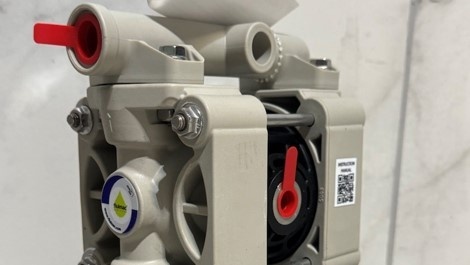
PHOENIX pneumatic diaphragm pumps from the Italian manufacturer FLUIMAC are used for pumping varnish, paint, nitric acid, ammonia, acetic and phosphoric acid, alkalis, ethylene, solvents, adhesives, and many other substances.
They operate using compressed air and two flexible diaphragms that alternately suction and discharge the liquid. One diaphragm bends and pushes the liquid out of the working chamber through the outlet valve. At the same time, the second diaphragm moves in the opposite direction, creating a vacuum — the liquid is drawn in through the inlet valve. The air valve automatically switches the air supply to the opposite side.
Advantages of use: can run dry without damage; suitable for pumping viscous, abrasive, and aggressive substances; available in explosion-proof design; allow smooth capacity adjustment by regulating air pressure.
Application areas: chemical industry; food and pharmaceutical industries; agriculture; printing industry, and others.
May 25, 2026
Screw pumps
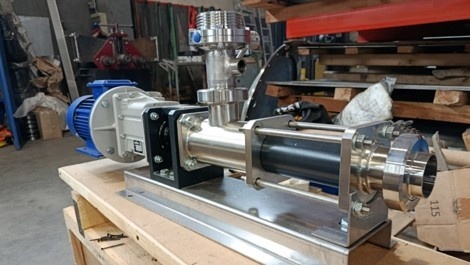
Screw pumps are used for pumping viscous liquids.
The operating principle is based on moving the liquid by means of a rotating screw inside the stator. They are also called progressive cavity pumps. Sealed chambers are formed between the screw and the stator. These chambers move the liquid from the inlet to the outlet without intensive mixing.
Application areas: food and chemical industries; oil and gas sector; construction; cosmetic industry.
Pumped products: creams, shampoos, liquid soap; sauces, honey, chocolate; fat, minced meat; crude oil and petroleum products; aggressive and viscous liquids; sludge, slurry, and much more.
We can manufacture a pump for any specific requirement.
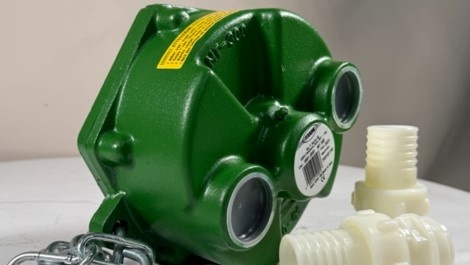
MT 300 roller pump , driven by the tractor power take-off (PTO) shaft.
This pump is not new to the market, but it continues to remain in demand — primarily because of its versatility and durability in field conditions.
Most common applications:
Field spraying
The pump is connected to the sprayer system and ensures stable delivery of the working solution. Suitable for applying: herbicides, pesticides, and liquid fertilizers.
Pumping technical liquids
Used for water, various solutions, and sometimes diesel fuel or other non-aggressive media.
Filling and emptying tanks
Convenient when working with tankers, barrels, and reservoirs in field conditions.
Washing machinery or equipment
How the roller pump works
The design is quite simple: inside the housing there is a rotor with rollers that create chambers of variable volume during rotation. This is what provides liquid suction and delivery.
The main feature is that the pump is powered by the tractor PTO. This means:
No separate power supply is required;
Stable operation even in the field;
Depends only on tractor RPM;
Can operate in reverse mode.
This makes the MT 300 максимально autonomous in operation.
Why it is efficient
Stable flow without pulsation
The roller system provides an even flow, which is especially important for spraying — the solution is delivered without pressure fluctuations.
Self-priming capability
The pump can operate without pre-filling the system, saving time during startup.
Easy maintenance
The construction is not overloaded with complex components — most servicing tasks can be performed without special tools.
Operation in field conditions
No dependence on electricity — only a tractor is needed. This is a key advantage for farmers.
Compactness and mobility
Easy to transport and quick to connect to machinery.
Important things to consider
Roller pumps have their own characteristics that should be understood before use:
Not designed for highly abrasive liquids;
Sensitive to dry running during prolonged operation;
The rollers should be checked periodically.
If basic operating rules are followed, the service life will be more than sufficient even under intensive use.
This pump is currently in stock, so you can confidently equip your machinery and start using it this season.
May 19, 2026
Spare parts for industrial and household pumps
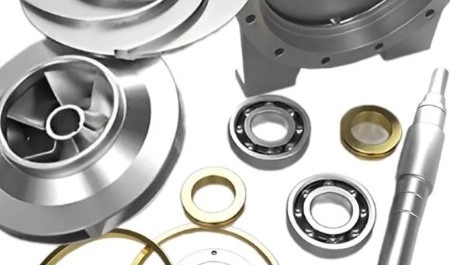
Honestly, most people start looking for pump spare parts only when the pump either stops pumping properly or stops working altogether. And in many cases, the problem is not as critical as it may seem at first. Sometimes it is enough to replace a seal or a few worn parts for the pump to continue operating normally without any issues.
We are often asked about spare parts for different types of pumps — domestic , borehole , circulation , drainage and sewage , as well as industrial models . Some customers are looking for an impeller, others need a shaft or a mechanical seal, and sometimes people simply do not know what exactly has failed. That is completely normal because not everyone deals with pumps every day.
Usually, customers just send a photo of the pump or the nameplate, and then we check the model to see what can be selected. Sometimes an original part is required, while in other cases a good-quality replacement is sufficient — it all depends on the situation and the equipment itself. Repair kits are also available because they are one of the easiest ways to restore a pump to proper operation without buying a new one.
There are also cases when the pump is already old and people think that spare parts are no longer available for it. However, quite often it is still possible to find either a compatible option or parts from another manufacturer that match the required parameters. That is why it is always better to check first rather than immediately writing the equipment off.
If you are not sure what exactly is needed — our managers will help you figure it out. Usually, a photo, the pump model, or simply a description of the problem is enough for selection.
May 18, 2026
AISI 304 Stainless Steel Butterfly Valves
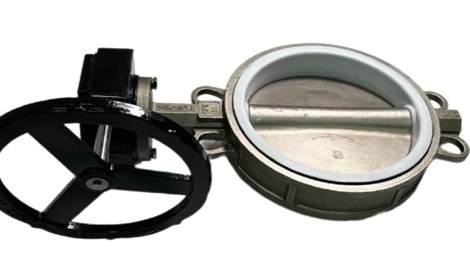
AISI 304 stainless steel butterfly valves are currently quite frequently ordered for water, various technical liquids, and industrial systems. Mainly because stainless steel handles moisture well and does not start rusting after a short period of time, as is often the case with cheaper alternatives.
In this model, both the body and the disc are made of AISI 304, while the seal is made of PTFE. In practice, this means the valve provides tight shut-off and operates reliably in the system without constant intervention or maintenance. This is important for many users, especially when equipment operates daily.
The advantage of a large-diameter butterfly valve with a worm gear reducer is the ability to operate it manually without significant physical effort, ensuring smooth opening and closing.
Most commonly used in:
pump stations;
irrigation systems;
fire protection systems;
main water supply pipelines;
wastewater treatment plants;
industrial pipelines.
There is nothing complicated about installation. The design is compact, which is why butterfly valves of this type are often installed where space is limited or where other equipment is already in place. The mechanism itself is simple and opens easily without unnecessary effort.
These butterfly valves can be found in industrial production, water supply systems, and even in some food processing applications. Everything depends on the medium and temperature conditions for which the valve is selected.
These valves are currently in stock. We can also offer other diameters and models for various applications and pipeline types.
May 16, 2026
A pump driven by the tractor's PTO
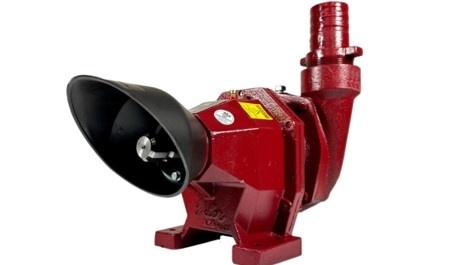
In farming and agricultural work, there are situations when water needs to be pumped quickly, but there is simply no access to electricity nearby. That is exactly why the MTZ-P 30-300 pump , which operates from a tractor PTO, is often used for such tasks. Connection takes very little time, and the pump itself can be used practically anywhere there is machinery available.
This model is commonly used for irrigation, filling tanks, supplying technical water, and various seasonal jobs. One of its biggest advantages is mobility, as the pump is not tied to one location. Today it can work near a reservoir, and tomorrow — already out in the field or at another site. For many users, this is much more practical than separate electric equipment.
These pumps are compatible with tractors such as: John Deere, Case IH, Ford, Massey Ferguson, Kentavr, Foton-Lovol FT504, Forte GT-181, XT-244, and others.
The MTZ-P 30-300 is not complicated to operate. Everything is quite straightforward: connect it to the tractor, start it up — and you are ready to work. That is why such pumps are often chosen by people who need simple and reliable equipment without unnecessary maintenance difficulties.
Another important point is the durability of the construction. The pump is designed for regular operation and handles conditions with dust, moisture, and constant workload without problems. This is especially important for agriculture, where equipment must work reliably throughout the season instead of simply sitting in the garage.