News Prom-nasos
1. Installation location: The ambient temperature at the installation site should be 0–40 °C, and the relative humidity should be below 90%. Please choose a flat location where vibrations from other machines are not transmitted.
Leave sufficient space for maintenance.
2. Base fixation: The base area on which the pump is installed must be larger than the pump base itself. If the mounting area is too small, the pump may be damaged due to stress concentration at the contact point. The pump base must be securely fixed.
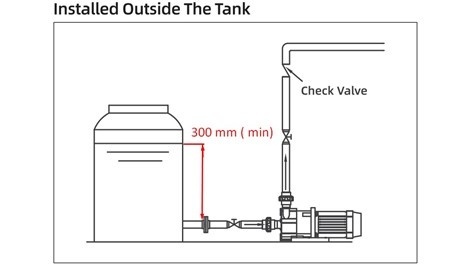
3. MD/QHX series pumps are NOT self-priming and must be installed under positive pressure conditions. The distance from the liquid surface to the suction inlet should be more than 30 cm. If the liquid head is too low, air may be drawn in, resulting in excessive wear of the pump bearings.
4. Pump discharge direction: The discharge outlet can be oriented freely, but to allow gas to escape from the pump chamber, it is recommended to direct the outlet upwards.
5. The pump head depends on the properties and temperature of the liquid, as well as the length of the suction pipeline. Keep the pipeline as short as possible and minimize the number of bends and turns.
6. Inlet and outlet valves should be installed as close as possible to the pump connections.
7. Check the voltage on the nameplate before connection. Proper grounding is mandatory.
8. The pump should be installed as close as possible to the tank and below its level (flooded suction installation).
Prohibited installation methods are shown in the figures below.
9. When the pump is used for handling hazardous liquids, flushing lines must be installed so that the internal parts of the pump can be cleaned after disassembly.

May 5, 2026
Protection of electrical equipment
The issue of electrical protection of equipment remains relevant at all times. Despite the vast amount of information on this topic and the wide range of protective devices, monitoring and control equipment, electric motors still fail.
Why does this happen? Most often, it is caused by the customer’s desire to save money on protection. Common justifications include statements such as: “Why do I need that control panel, everything works fine already,” “my old Soviet pump worked for 20 years without any problems,” “I turned it off because it keeps shutting down the pump and I have to go restart it,” and similar arguments.
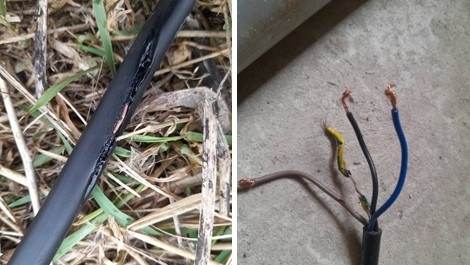
Here is an example of a typical “protection” setup for a 4 kW three-phase sewage pump.
And here is the result of such “protection”!
Another way to “burn out” your pump is to purchase a control box (protection and control panel) that supposedly has “everything included,” but fail to configure it according to your equipment parameters.
Every device, including pumping equipment and control panels, must be operated in accordance with the requirements specified in the operating manual.
As practice shows, the operating manual is often only read when there is nothing else left to read—or when everything has already burned out or seized.
Here is another example of a “warranty case.”
A borehole pump was connected through a protection and control panel , but no settings were configured.
The pump has a power rating of 4 kW, 380 V, and a nominal current of 8.8–9 A. Considering a permissible deviation of 10%, the protection current should be set to around 10 A.
However, the maximum protection current was set to 13.9 A.
And the no-load current was 8.5 A.
As a result, the pump was constantly shutting down during operation, since the no-load current was nearly equal to the nominal current, eventually leading to motor winding burnout.
Do not neglect the requirements of the operating manual! Contact our company’s specialists. We will help not only select the right equipment but also configure it correctly.
May 4, 2026
Adjusting the flow rate of a gear pump
Gear pump is a positive displacement pump. This means that the movement of the fluid (product) occurs due to a change in the volume of the working chamber.
Accordingly, the operating principle leads to the following conclusion — the flow rate of such a pump must not be regulated by closing shut-off valves on the discharge line.
When closing the valve on the discharge line, the following situations may occur:
damage to the gears
seal leakage
coupling damage
electric motor burnout
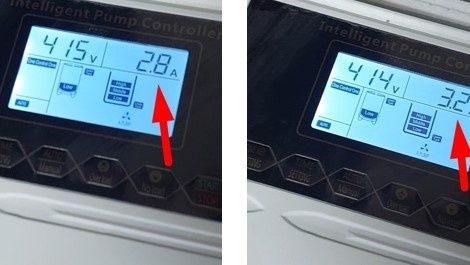
In the images below, you can observe the current consumption when the pump operates with an open line (left image) and when attempting to close the valve (right image).
When the valve is closed, the current immediately increases.
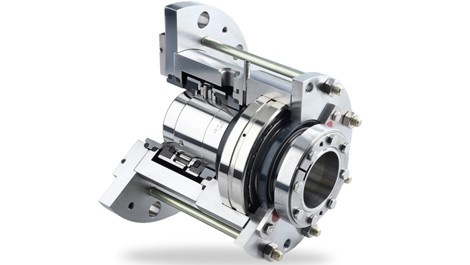
Cartridge seals are recommended for installation in pumps and mixers operating with such media as non-lubricating liquids, gases, liquids with a high concentration of solids, or those prone to crystallization, as well as adhesives, pastes, paints, and hazardous liquids.
Installation of cartridge mechanical seals:
Lubricate the shaft with a 2–3% aqueous solution of neutral liquid soap.
Slide the cartridge along the shaft until the flange contacts the housing.
Check the alignment of the seal on the shaft. Rotate the shaft by hand to detect any potential metal-to-metal noise. If the noise persists, check the shaft alignment.
Connect the appropriate lines for flushing, circulation, and barrier fluid.
This assembly requires a continuous supply of liquid, known as buffer or barrier fluid, into the chamber where the seal is installed. The pressure of the barrier fluid must be 0.5–2 bar higher than the pressure of the pumped (sealed) liquid. In case of seal failure, the barrier fluid will mix with the process liquid. This feature is especially important when the process liquid is hazardous or contaminating.
In a double cartridge seal, connect an external fluid for cooling the secondary seal.
In all cases, it is important to ensure that the process fluid contacts the seal before startup, as dry running can severely damage the sealing surfaces, even if it lasts only a short time. Although in some cases dry running cannot be avoided, special material combinations can be recommended to reduce its negative impact.
If the seal is located in the oil chamber of a pump filled with biodegradable petroleum jelly oil, this oil (lubricant) remains in the chamber continuously until the next service replacement. There is no pressure in the chamber itself.
In case of seal failure, the pumped liquid enters this chamber and mixes with the oil, which is detected by a water presence sensor (if installed).
An additional leakage chamber (motor chamber) on the motor winding side is usually empty. If pumped liquid enters this chamber, it may damage the electric motor.
April 20, 2026
Chemical pumps with magnetic couplings
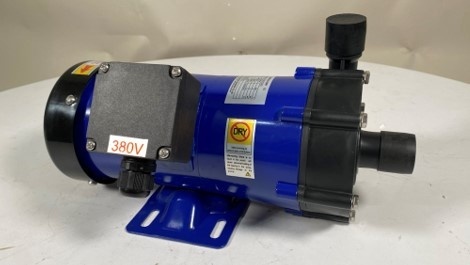
Chemical pumps with magnetic coupling are used for pumping aggressive substances, acids, alkalis, and solvents. Manufactured from high-quality materials resistant to corrosion and aggressive chemicals, they ensure high performance, reliability, and safety.
The operating principle of the pump is that the magnetic coupling transmits torque from the motor to the pump shaft through a magnetic field, eliminating any contact between the working parts. This reduces friction and wear of components, which extends the service life of the pump.
When selecting a pump, it is important to consider the needs of your production process, the nature of the working fluids, and other important parameters.
MD pumps from the manufacturer Qeehua have proven to be reliable.
To select the correct pump, it is necessary to know:
the substance that the pump will transfer;
capacity;
head (delivery height).
The material from which the pump is made depends on what exactly will be pumped.
For example: nitric acid (HNO3) 20%.
To select a pump, we review the compatibility table of pump materials with this acid. In Table 1 we can see that if the temperature of HNO3 is 40°C, GFRPP and CFRPP (types of polypropylene) are suitable. However, if the temperature is already 60–80°C, PVDF and CFRETFE should be used (a more chemically resistant version of PVDF).
Table 1
April 13, 2026
Cooling the electric motor of a well pump
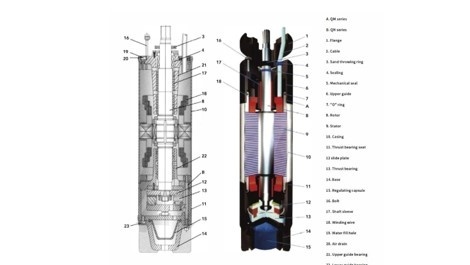
The electric motor of a borehole pump , unlike a standard asynchronous electric motor with air cooling, has certain features.
Due to the fact that it is located in a borehole, its diameter has certain limitations — it cannot be larger than the borehole itself. In addition, this motor is constantly under water, therefore it must be hermetically sealed.
Borehole pump motors are divided into two main groups:
oil-filled;
water-filled.
In the first case, the motor is filled with a special oil (lubricant), most often a petroleum jelly–based lubricant or another dielectric liquid that ensures its cooling.
Water-filled motors are cooled by water, while the winding wire of the electric motor is coated with PVC.
The tightness of the motor at the point where the drive shaft exits is ensured by a mechanical seal and additionally by a gland seal.
In both cases, cooling is provided by the water pumped by the pump. Water is drawn into the pump section at a certain velocity. The velocity depends on the pump capacity and the difference between the diameters of the motor and the borehole – (Dс-dн)
The detailed specifications of the borehole pump motor indicate the minimum water flow velocity along the motor housing required to ensure reliable cooling.
On average, the water velocity should be more than 8 cm per second. Therefore, as can be seen from the illustration above, when selecting a borehole pump it is necessary to consider the borehole diameter, pump capacity, and the diameter of the pump itself.
Our company’s managers are ready to help you choose a pump according to your needs!
A borehole (deep-well) pump is a special type of pumping equipment designed to extract water from deep artesian wells and boreholes. Another method of use is operating the pump as a high-pressure pump for supplying water from pools and reservoirs in a horizontal position, provided that an additional cooling jacket and a support base are used.
Until recently, the most popular pumps in our country were the ECV brand pumps, which were produced at two factories – Kherson Electromechanical Plant and Azovenergomas (Berdyansk).
At present, it is practically impossible to find a new ECV pump in Ukraine. The Ukrainian market is saturated with borehole pumps from various manufacturers — European, Turkish, and Chinese.
Our company is no exception; for several years we have been supplying borehole pumps from the Chinese manufacturer Deep-Well-Pump .
The main priority is pumps for 4-inch wells ( pumps of the 4SD, 4SS series ) and 6-inch wells ( pumps of the 6SR series ).
The new 6SR pump series is designed as a full replacement for ECV 6 pumps with similar characteristics.
The number “6” in the ECV pump marking indicates the minimum well diameter in which this pump can be operated, namely 6 inches, which corresponds to 150 mm.
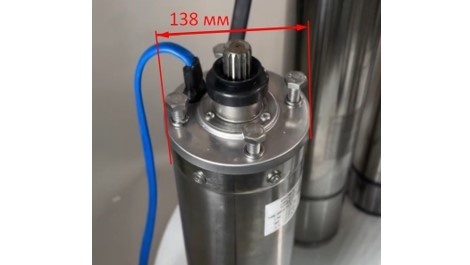
The pump itself actually has a smaller diameter, about 138 mm (see photo).
The difference between the diameters of the pump (especially the electric motor) and the well itself is very important. First, the pump must freely pass into the casing pipe to a great depth, and at the same time it should not have too small a diameter. The fact is that when the difference in diameters is large, the gap between the casing pipe wall and the electric motor housing increases, which results in poorer motor cooling. In many cases, a 6-inch ECV pump can be replaced with a 4-inch pump if the pump operates periodically and its hydraulic parameters meet the required values. In this case, the electric motor will not have time to overheat if it operates for 15–30 minutes. However, if the pump operates continuously in a deep well and the well diameter where it is installed is from 150 to 200 mm, a 6-inch pump is necessary.
Our company offers high-quality and reliable borehole pumps for wells with a diameter of 6 inches. Since we are direct importers, the pumps are available directly in our warehouse. Our managers are ready to ship the equipment to you on the day of payment!
Main advantages and features of the 6SR pump series
Designed for wells with a diameter of 6 inches or more;
Capacity from 6 to 40 m³/h;
Head from 40 to 300 m of water column;
Electric motor in stainless steel AISI304 design;
Motor flange dimensions according to NEMA standards;
Discharge outlet thread according to ISO 228/1 (cylindrical pipe thread);
6SR electric motor – oil-filled, rewindable;
Maximum immersion depth below the water level – 90 m;
Maximum well depth – up to 250 m;
Continuous duty operation – S1.
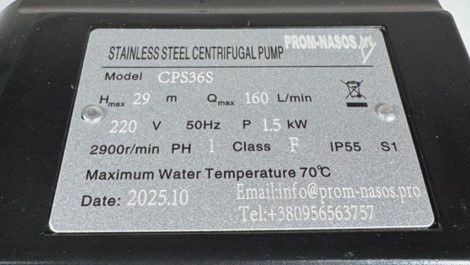
In beverage production — especially when it comes to beer, wine, or alcohol — the equipment used for transporting liquids plays an important role. Pumps must operate reliably, must not affect product quality, and must comply with food industry requirements. For such tasks, food-grade stainless steel centrifugal pumps are used, one of which is the CPS36S model.
This pump is designed for pumping various liquids without solid impurities. It is most commonly found in breweries, wineries, alcohol production facilities, and food industry enterprises. Thanks to its simple design and reliable materials, it is suitable for both small production facilities and medium-scale technological lines.
Design and operating principle
CPS36S is a centrifugal end-suction pump that operates according to a fairly simple principle. Inside the casing there is an impeller that rotates at high speed. During rotation, centrifugal force is generated, which moves the liquid from the center of the chamber to the outlet nozzle.
This design ensures a smooth and stable liquid flow without sudden pressure fluctuations. This is important in beverage production, as delicate products such as beer or wine should not be exposed to excessive mechanical impact.
The pump casing is made of AISI 304 stainless steel. This material is widely used in the food industry because it is corrosion-resistant, easy to clean, and does not react with food products.
Main specifications
The main technical parameters of the CPS36S pump include:
electric motor power — 1.5 kW;
maximum capacity — up to 11 m³/h;
maximum head — approximately up to 30–34 m;
motor speed — about 2900 rpm;
power supply — 220 V, 50 Hz;
casing material — AISI 304 stainless steel;
permissible liquid temperature — up to 60 °C.
Thanks to these characteristics, the pump is well suited for pumping food-grade liquids in production processes or for transferring products between tanks.
Advantages of the CPS36S pump
Food-grade stainless steel;
Stable operation;
Easy maintenance;
Compact size;
Versatile application.
The model is suitable not only for beer or wine. It can also be used for pumping alcohol, milk, water, or other liquids without mechanical impurities.
Application areas
The CPS36S pump is used in various sectors of the food industry. It is most commonly applied for:
pumping beer in breweries;
transporting wine in wineries;
working with alcohol in distilleries;
pumping milk and other food liquids;
use in technological lines of food production facilities.
Thanks to its versatility, the pump can be used in various processes where liquid needs to be moved without losing its properties.
The CPS36S pump is a practical solution for companies working with beer, wine, alcohol, and other food liquids. Its main advantages are the stainless steel casing, stable operation, and simple design that ensures reliability in everyday use.
If you need to select such a pump for a brewery, winery, or other production facility, it is important to consider the required capacity, head, and liquid characteristics. On our website you can purchase the CPS36S pump, as well as receive consultation and individual selection of pumping equipment according to your tasks. This allows you to choose the optimal solution for a specific production process.
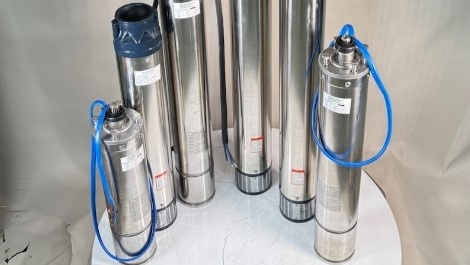
When it is necessary to organize a stable water supply from an underground source, one of the most effective solutions is the use of a submersible borehole pump . Such equipment is used both in private homes and on farms, industrial facilities, or irrigation systems. Its main task is to lift water from a great depth and provide the required pressure in the system.
Unlike surface pumps, submersible models are installed directly in the borehole, below the water level. Thanks to this, they can operate at significantly greater depths and reliably supply water even when the source is located tens or hundreds of meters below the surface.
Features of submersible borehole pumps
The design of borehole pumps is intended for operation in difficult conditions. They have a sealed housing that protects the motor from contact with water, as well as a multistage impeller system that creates the required pressure.
In most models, the housing is made of stainless steel or wear-resistant alloys. This allows the equipment to operate for a long time in a water environment without corrosion or loss of performance.
Another characteristic feature of such pumps is their elongated shape. This design allows the equipment to easily fit into the borehole and operate even in narrow casing pipes.
Different performance types
Submersible pumps can differ significantly from each other in technical parameters. The most important of them are capacity, head, and motor power.
For example, for a small private house a pump with a capacity of several cubic meters of water per hour is usually sufficient. At the same time, a farm or an industrial facility may require equipment capable of pumping dozens of cubic meters of water during the same time.
Head is also an important indicator. It determines from what depth the pump can lift water and what pressure will be created in the water supply system. The deeper the borehole, the greater the head the pump should have.
Differences between models
Borehole pumps may differ not only in performance. Among other parameters that should be considered are:
pump diameter (for example 3, 4, 5 or 6 inches);
electric motor power;
maximum head;
housing material;
power supply type — single-phase or three-phase.
It is the combination of these characteristics that determines the conditions for which a specific pump model is suitable.
Why choose a borehole pump
Submersible pumps have several important advantages compared to other types of pumping equipment.
First, they can operate at significant depths where surface pumps simply cannot cope.
Second, such equipment provides a stable water supply even during long-term operation. This is important for home water supply systems, irrigation, or industrial needs.
Another advantage is compactness. The pump is installed directly in the borehole and does not take up space on the surface.
Individual equipment selection
Since every borehole has its own characteristics — depth, water level, pipe diameter, and required capacity — it is best to select the pump individually.
It is important to consider not only the technical parameters of the equipment but also the operating conditions. An incorrectly selected pump may work inefficiently or wear out quickly.
On our website you will find a wide selection of submersible borehole pumps with different capacities and power ratings. We help select equipment according to the specific parameters of the borehole and the customer’s needs so that the water supply system works reliably and without unnecessary costs.
Submersible borehole pumps are one of the most effective solutions for lifting water from underground sources. They are characterized by high reliability, the ability to operate at great depths, and a wide range of models with different characteristics.
The correct selection of equipment makes it possible to ensure a stable water supply for a house, farm, or industrial facility. Therefore, before purchasing, it is important to consider the borehole parameters and the required capacity. Our specialists will help you select a submersible borehole pump according to your tasks and operating conditions.
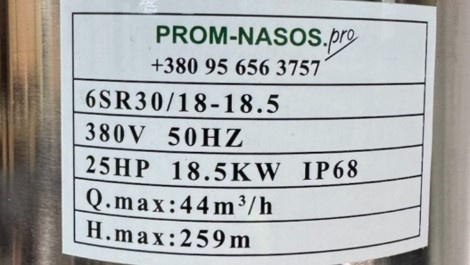
Borehole pumps are widely used today for stable water supply in private households, farms, and industrial facilities. One of the models that has proven itself well when working with deep water sources is the 6SR30/18-18.5 pump . This is a high-performance piece of equipment designed for long-term operation in demanding conditions and capable of delivering a significant volume of water.
The 6SR30/18-18.5 model belongs to the class of multistage submersible pumps designed for installation in boreholes. The equipment is engineered to operate at considerable depths and ensures stable water supply even during intensive use.
Such pumps are used both in centralized water supply systems and for irrigation, supplying technical water, or providing water for industrial processes.
The housing and main components are made of stainless steel, which provides high corrosion resistance and a long service life.
Main characteristics
The 6SR30/18-18.5 pump has parameters that allow it to be used in boreholes of medium and large depths:
electric motor power — 18.5 kW;
maximum capacity — up to 40 m³/h;
maximum head — up to 257 m;
pump diameter — 6 inches (150 mm);
discharge outlet diameter — 3 inches;
motor speed — about 2850 rpm;
power supply — three-phase 380 V, 50 Hz;
housing and shaft material — stainless steel AISI 304.
Thanks to these characteristics, the pump can operate in systems where high performance and constant water pressure are required.
Advantages and applications of the 6SR30/18-18.5 pump
In practice, the 6SR30/18-18.5 pump is well suited for:
water supply systems for private houses and cottage communities;
agricultural enterprises and irrigation systems;
water intake from deep boreholes;
municipal and industrial facilities.
Due to its high performance, it can be used where standard household pumps are no longer able to handle the task.
If there is a need to select a submersible borehole pump for specific operating conditions, it is important to consider the borehole parameters, required capacity, and water lifting depth. On our website you can purchase the 6SR30/18-18.5 pump and also receive an individual equipment selection according to your needs. Our specialists will help you choose the optimal model and provide консультацію regarding installation and operation.