News Prom-nasos

The BTS Engineering company offers decanter centrifuges for processing sunflower and rapeseed foots , which contains 25% of dry goods – it is a precipitate that is formed during the production of vegetable oil. The basis of the non-fat complex of sunflower foots are phospholipids, protein and mucous substances of the starting oil. Sunflower foots has a high nutritional and energy value, it is processed at a temperature of 30 70 C
We propose to divide the foots obtained during production in order to obtain a dehydrated cake, feed and filtrate with a minimum content of suspended solids for further purification.
The quality of the filtrate after the centrifuge based on the above input parameters:
The solid content in the filtrate (separated oil) at the output is 0.5 - 0.3 % of DS
Sunflower or rapeseed foots are secondary product that appears in the manufacture of unrefined sunflower or rapeseed oil. It is often used in chemical and feed mills. Fats are isolated from the foots, which are used in the production of drying oil.
The product is rich in fats and proteins. Therefore, it is part of the feed that makes up the daily diet of animals and birds. This supplement has a positive effect on the reproductive function, strengthens the immune system, improves growth and quality


Inlet of stillage filtrate after decanter 14000 kg at 3.5% dry matter. Evaporated moisture capacity 12600 kg / h
Concentrate: 1400 kg / h at 35% DM
Steam consumption 3458 kg / h at 6 bar
Recycled water consumption 250 m3 per hour
The total electrical power of the equipment is 118 kW
Platform dimensions 13 mx 5 mx 16 m
After evaporation of vinasse, the condensate is processed and sent to the technology, and the concentrate, after the evaporation plant, is sent to drying.
July 16, 2021
Pump for tug, daily drain

Pump for seawater with mechanical impurities and oil residues for daily drying. Our offer focuses on quality, durability and ease of use. There is a compressed air in compressor on tugboats and other water transport, that can be used to supply air to diaphragm pneumatic pumps, daily dehumidification pumps.
Ease of use and reliability! Long service life! Reliability !!!
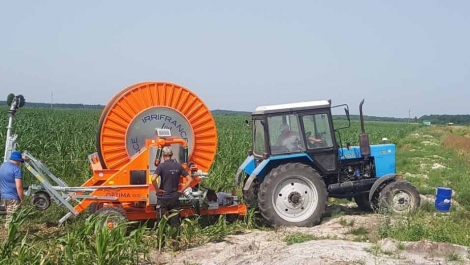
The working position of the elements of the set of the hose-drum sprinkler machine provides:
the installation of a tractor-towed chassis with a hose wound on a drum at the hydrant of the pressure pipeline, which is connected to the pump
the unwinding the hose by dragging it with a tractor and laying it on the irrigation site in the sprinkling zone.
the installation of a platform trolley with a sprinkler at the end of the moistened irrigation zone.
the connecting the sprinkler to the hose and connecting the hose to the hydrant of the irrigation system.
the supply of irrigation water to the water supply hose and the inclusion of the sprinkler in operation (watering).
as watering proceeds, the hose is automatically wound at a certain speed on a drum driven by a turbine hydraulic drive (under the pressure of water coming from a pump to a hydraulic turbine or by means of a separate winding mechanism driven by a tractor.
under the force transmitted to the hose during its winding, the trolley with the sprinkler moves in the direction of the hydrant, thanks to which a strip of agricultural land is watered with a width of 30 to 90 meters and a length of up to 300 to 600 meters or more, depending on the model and size of the hose-drum set of the sprinkler machine.
Judging by the technology of work on the irrigation site, the hose-drum sprinkler device, the hose-drum device of rain irrigation to varying degrees refers to sprinkler installations and sprinkler machines. Due to the lack of its own propulsion for moving from one irrigation site to another and the need to use a self-propelled mechanism separate from the device when installing the sprinkler in the initial working position, the sprinkler (rain irrigation) under consideration refers to sprinkler installations. And on the basis of the presence of its own means for moving the sprinkler on the irrigation site during the irrigation process, this sprinkler can be attributed to sprinkler machines.
To date, a significant number of various domestic and imported designs and standard sizes of hose-drum sprinklers have been developed, some of which are discussed below.
This circumstance determines the possibility of using synonymous use of terms in the subsequent presentation: "hose sprinkler", "hose drum sprinkler", "hose drum unit" and (or)"hose drum sprinkler machine".
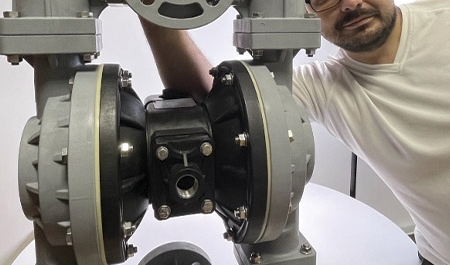
Diaphragm pump for detergents, gel, liquid soap, the ability to pump viscous products with active substances. Suitable for pumping viscous liquids and adhesives.
The pump is suitable for unloading and loading onto vehicles, as well as packing in euro cubic meters. Productivity of the DP series 15 to 20 m3 per hour. The ability to use in categorized rooms.
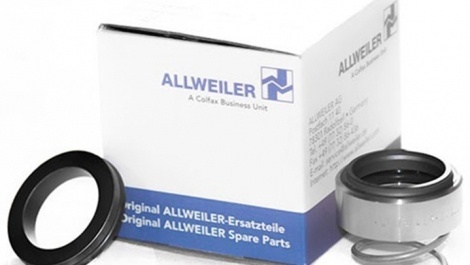
High-temperature cantilever pump ALLWEILER NTT - for pumping thermal oil, self-cooling. Pumps are used in particularly harsh conditions: asphalt production, mineral wool production, oil industry - processing of dark oil products, bitumen production, heating of bitumen tanks, paint and varnish industry, food industry, production of plastics, tires, rubber, roofing, etc. Accordingly, the mechanical seal must be as durable and reliable as possible.
BTS seals fully meet these criteria, using Viton rubber (fluoroelastomer), solid carbon, antimony-impregnated / SSic, silicone carbide.
Shaft seal U5A (item 433.02) - uncooled, maintenance free, unbalanced. In front of the mechanical seal there is a safety stuffing box with the next throttling zone. Even if the mechanical seal fails, these additional safety elements prevent fluid from leaking. It is guaranteed that any leakage heat escaping from the shaft seal is safely discharged through the LO leakage outlet and fully collected. Due to the special design of the integrated unit, the temperature is reduced to such an extent that proper functioning of the bearing and shaft seal is ensured.
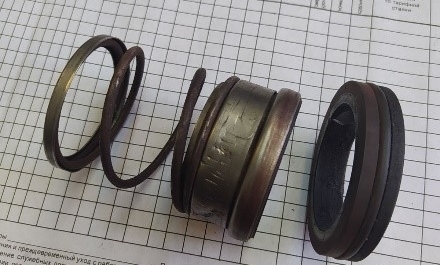
Centrifugal pump FLOWSERVE WDX series - horizontal, multistage, with vane diffuser. WDX pumps are modular in design with identical stages. A variety of optimal characteristics and materials allow it to be used for a variety of purposes, such as boiler feed or reverse osmosis.
Modifications of these pumps imply the use of both stuffing box packing and mechanical seals .
General recommendations for the use of a mechanical seal in FLOWSERVE WDX pumps:
Mechanical seals do not require adjustment.
Slight initial leakage will stop when the packing has been burned in.
During the assembly operation, special attention should be paid to cleanliness.
Before pumping dirty liquids, it is recommended to run-in the mechanical seal with a clean liquid to protect the friction pairs.
Routine maintenance consists of checking the tightness. it necessary to detect any small leak.
Never run a mechanical seal dry, even for a short time!
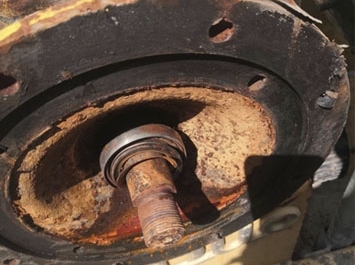
The VARISCO 4"EL J4-250 motor pump is designed for pumping both pure liquid and solid particles. High resistance to abrasive liquids is achieved, among other things, thanks to a high-quality mechanical seal . Mechanical seals are used with external lubrication.
The materials of the oil seal (mechanical seal) can be silicon carbide by silicon carbide or tungsten carbide. We can also offer a rotating part made of graphite for pumping petroleum products. The type of rubber parts is Viton or NBR.
It is also possible to equip the pump with a double seal or a cartridge seal.
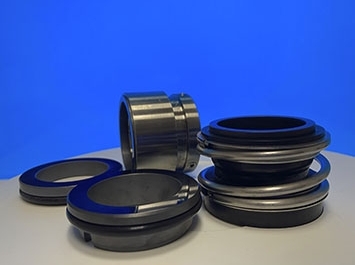
For high-temperature working conditions, the existing RMG12 will be replaced by the new eRMG12 with the introduction of eSic-Q7 instead of U3 tungsten carbide. In this case, the mechanical seals will also be 100% interchangeable, and the pump description will change to indicate the new material. This applies only to diameters 22, 28 and 38, while for 48 and 70 a balanced mechanical seal is the preferred solution. The description and article numbers do not change, except for the high-temperature version using the eRMG12 mechanical seal.
The articles and description do not change, except for the high-temperature version with an eRMG12 mechanical seal.
Seal face: carbon graphite antimony impregnated (A), carbon graphite resin (B), silicon carbide (Q1, eSiC-Q7)
Seat: Silicon carbide (Q1, eSic-Q7), Tungsten carbide (U3)
Elastomer: NBR( P), EPDM (E), FKM (V),HNBR (X4)
Metal parts: CrNiMo steel (G), called Hastelloy® (m)
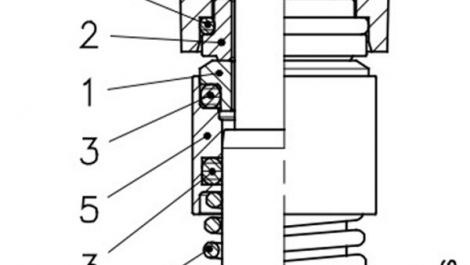
The Lowara 15SV15F150T/D (serie e-SV 1-22) - is a vertical multi-stage pump with a two-pole motor. This series of pumps is widely used for pressure boosting in a number of industrial applications.
Lowara 15SV15F150T/D Pump Mechanical Seal - Roten UNE5-16-X . Depending on the application conditions, different materials are available
KL01AD7 DICHTSET D16 BIL Q1BEGG+OR SV (Mechanical seal UNE5K-16-Q1BEGG-WRAS)
KL01AD2 DICHTSET D16 BIL Q1BVGG+OR SV (Mechanical seal UNE5K-16-Q1BVGG)
KL01AD9 KIT TEN D16 BIL Q1CTGG+OR SV # (Mechanical seal UNE5KCA-16-TRCL-Q1CTGG)
KL01AD3 KIT TEN D16 BIL Q1Q1EGG+OR SV# (Mechanical seal UNE5K-16-Q1Q1EGG )
KL01AEA KIT TEN D16 BIL Q1Q1TGG+OR SV# (Mechanical seal UNE5KCA-16-TRCL Q1Q1TGG)
KL01AD4 DICHTSET D16 BIL Q1Q1VGG+OR SV (Mechanical seal UNE5K-16-Q1Q1VGG)
Transcript of materials :
Q1: Silicon Carbide
B : Coal impregnated with resin
C : Coal impregnated with special resin
E : Ethylene-propylene rubber
V : Fluoroprene
T : Polytetrafluoroethylene
G : AISI 316 steel